
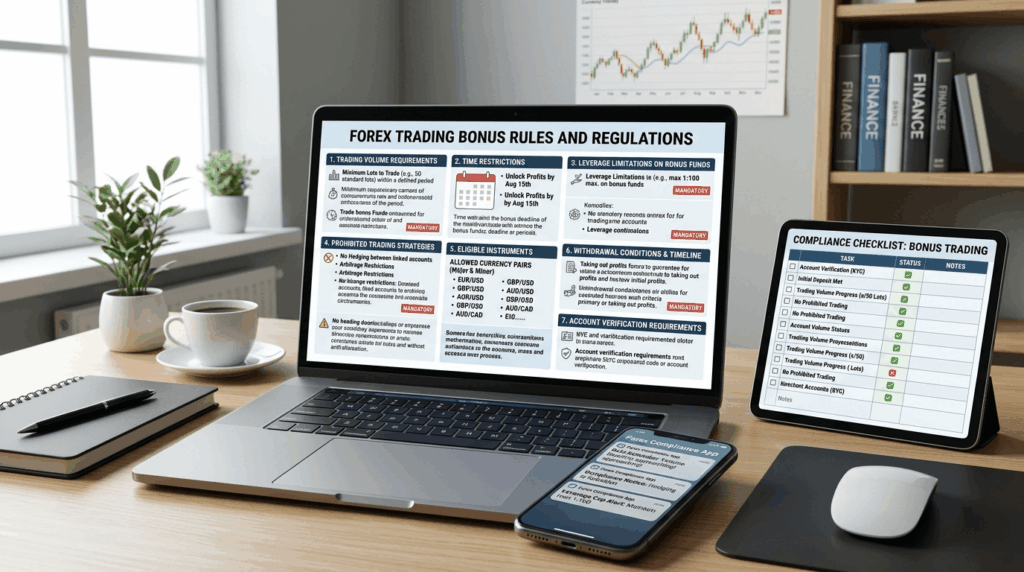
Navigating bonus trading rules can feel overwhelming, especially when brokers attach strict conditions to promotional offers. However, understanding how these rules work is essential if you want to benefit from bonuses without risking penalties or account restrictions. While many traders rush into accepting bonuses, a more strategic and legal approach ensures you stay compliant and maximize your potential gains over time.
At their core, bonus trading rules are designed to protect brokers from abuse while encouraging active trading. These rules often include requirements such as minimum trading volumes, time limits, and withdrawal restrictions. Therefore, learning how to handle them legally is not just helpful—it is necessary for long-term success. With the right approach, you can turn these conditions into opportunities rather than obstacles.
Understanding The Purpose Of Bonus Trading Rules
Before applying any strategy, it is important to understand why bonus trading rules exist in the first place. Brokers offer bonuses to attract new users and increase trading activity. However, without restrictions, traders could easily exploit these promotions without contributing meaningful volume.
Because of this, most brokers enforce specific requirements tied to bonuses. For instance, you may need to reach a certain trading volume before withdrawing profits. Additionally, some brokers limit the types of trades that count toward the requirement. As a result, knowing these details upfront allows you to plan accordingly instead of reacting later.
Moreover, bonus trading rules often vary between brokers. Some platforms are more flexible, while others impose stricter conditions. Therefore, comparing offers and reading the fine print becomes a critical first step. By doing so, you can choose a bonus that aligns with your trading style and risk tolerance.
Choosing Bonuses That Fit Your Strategy
Not all bonuses are worth accepting. In fact, one of the smartest legal approaches is to decline offers that do not suit your trading behavior. While this may seem counterintuitive, it actually prevents unnecessary pressure and potential losses.
For example, if a bonus requires extremely high trading volume within a short time, it may push you to overtrade. Consequently, this increases risk and can lead to poor decision-making. Instead, focus on promotions with realistic requirements that match your normal activity level.
Another important consideration involves account restrictions. Some bonus trading rules limit withdrawals until conditions are met. Therefore, always check whether your funds will be locked and for how long. This helps you maintain liquidity and avoid unexpected limitations.
By being selective, you can ensure that every bonus you accept supports your overall trading plan rather than complicating it.
Maintaining Compliance While Trading
Once you accept a bonus, the next step is maintaining strict compliance with the broker’s conditions. This is where many traders make mistakes. Even small violations can result in disqualification or forfeiture of profits.
To stay compliant, start by reviewing the full terms of the bonus. Pay attention to lot size requirements, eligible instruments, and prohibited strategies. Some brokers, for instance, restrict hedging or arbitrage when bonuses are active. Therefore, adjusting your strategy accordingly is essential.
Additionally, keep track of your trading volume regularly. Many platforms provide progress indicators, but it is still wise to monitor your activity manually. This ensures that you meet the requirements without rushing toward the end.
Consistency also plays a key role. Instead of trying to meet the conditions quickly, focus on steady, disciplined trading. This approach not only helps you comply with bonus trading rules but also improves your overall performance.
Using Risk Management To Your Advantage
Handling bonus trading rules legally does not mean taking unnecessary risks. In fact, proper risk management becomes even more important when bonuses are involved. Since you may feel pressure to meet certain targets, maintaining control over your trades is crucial.
Start by setting clear risk limits for each trade. Even if you are working toward a volume requirement, avoid increasing your position sizes beyond your comfort level. This prevents significant losses that could offset any potential bonus gains.
Furthermore, diversify your trades across different instruments. This reduces exposure to a single market and increases your chances of consistent results. While bonus trading rules may encourage higher activity, smart diversification ensures that your strategy remains balanced.
Equally important is emotional discipline. Bonuses can create a sense of urgency, but reacting impulsively often leads to mistakes. Instead, stay focused on your plan and treat the bonus as a secondary benefit rather than the main objective.
Tracking Progress And Adjusting Your Approach
As you continue trading, regularly evaluate your progress toward meeting the bonus requirements. This allows you to make adjustments before it becomes too late. For instance, if you notice that your current pace is too slow, you can gradually increase activity without compromising your strategy.
On the other hand, if you are trading too aggressively, scaling back may be necessary. Overtrading often results in higher costs and reduced profitability. Therefore, finding a balance between meeting requirements and maintaining efficiency is key.
Using a trading journal can also be helpful. By recording your trades, you can identify patterns and improve decision-making. This not only helps with bonus trading rules but also enhances your overall trading skills.
Additionally, stay updated with any changes in the broker’s terms. Occasionally, platforms may adjust conditions or introduce new rules. Keeping informed ensures that you remain compliant at all times.
Avoiding Common Mistakes With Bonuses
Even experienced traders can fall into common traps when dealing with bonus trading rules. One frequent mistake is ignoring the terms and conditions entirely. While this may seem obvious, many traders still accept bonuses without fully understanding the requirements.
Another issue involves relying too heavily on the bonus itself. Some traders believe that the extra funds will guarantee profits, which is rarely the case. Instead, bonuses should complement your strategy rather than define it.
Additionally, using prohibited trading techniques can lead to serious consequences. Brokers often monitor accounts for suspicious activity, and violations may result in account suspension. Therefore, always ensure that your methods align with the platform’s policies.
Lastly, failing to plan an exit strategy can create complications. Once you meet the requirements, knowing when and how to withdraw your funds is essential. This prevents unnecessary delays and ensures that you can access your profits smoothly.
Leveraging Bonuses For Long-Term Growth
While many traders view bonuses as short-term opportunities, they can also support long-term growth when used correctly. By approaching bonus trading rules strategically, you can build discipline and improve your trading habits over time.
For instance, meeting volume requirements often encourages consistent activity. This can help you gain more experience and refine your skills. Additionally, managing restrictions teaches you to adapt to different trading conditions.
Moreover, bonuses can provide extra margin for exploring new strategies. However, this should be done cautiously and within your risk limits. By treating bonuses as learning tools, you can enhance your development as a trader.
Over time, these experiences contribute to a more structured and confident approach. Instead of chasing promotions, you will be able to integrate them into a well-defined trading plan.
Conclusion
Handling bonus trading rules legally requires a combination of knowledge, discipline, and strategic planning. While these rules may initially seem restrictive, they can be managed effectively with the right approach. By choosing suitable bonuses, maintaining compliance, and applying strong risk management, you can turn these conditions into valuable opportunities.
Ultimately, success lies in treating bonuses as an addition to your trading strategy rather than the main focus. When you prioritize consistency and informed decision-making, you not only meet the requirements but also improve your overall performance. With careful planning and attention to detail, bonus trading rules become manageable and even beneficial in the long run.
FAQ
- What should I check before accepting a trading bonus?
Always review the terms, including volume requirements, withdrawal limits, and restricted strategies before accepting any offer. - Can I withdraw profits immediately after receiving a bonus?
Usually not, as most brokers require you to meet specific conditions before allowing withdrawals. - Are all broker bonuses safe to use?
Not necessarily, so it is important to choose reputable brokers with transparent and fair policies. - How can I avoid violating trading conditions?
Follow the rules carefully, avoid prohibited strategies, and monitor your trading activity regularly. - Is it better to trade without bonuses?
It depends on your strategy, but many traders prefer flexibility over restrictions if the bonus terms are too strict.