
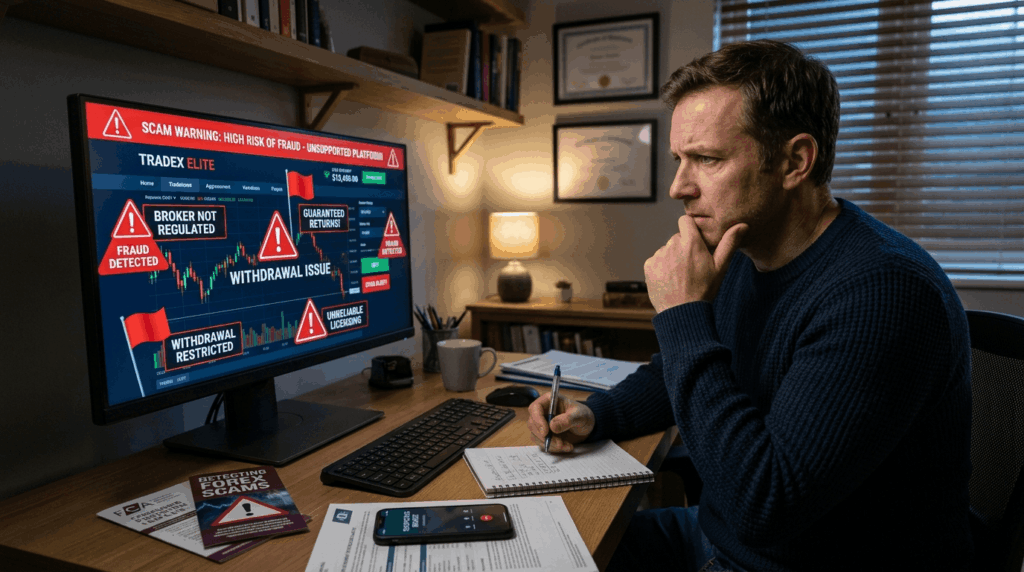
A forex broker scam can feel overwhelming because it often combines financial loss, emotional pressure, and a deep sense of betrayal. You may have trusted a platform that looked professional, spoke confidently, and promised a smoother path into currency trading. Then, suddenly, withdrawals were blocked, account managers disappeared, fees kept appearing, or your account balance changed without explanation. Although the situation may feel urgent, the best response is calm, organized action. The sooner you protect your accounts, preserve evidence, and report the fraud, the better your chances become of limiting further harm.
Many victims blame themselves after a forex broker scam, yet these operations are built to manipulate trust. Fraudulent brokers often use polished websites, fake reviews, social media ads, fabricated trading dashboards, and persuasive sales scripts. They may also pressure you to deposit more money after an initial “profit” appears on screen. However, that screen may not reflect real trading at all. In many cases, scammers control the platform, the account balance, the communication, and the withdrawal process. Therefore, your first goal is not to argue with the broker. Instead, your goal is to stop the bleeding, secure your information, and create a clear record of what happened.
What To Do Immediately After a Forex Broker Scam
The first step after a forex broker scam is to stop sending money, even if the broker claims that one final payment will unlock your withdrawal. Fraudulent platforms often invent taxes, verification charges, liquidity fees, account upgrade fees, or anti-money-laundering fees. These demands usually appear after you request a withdrawal. Because the scammer already knows you want your money back, they may use fear and urgency to push you into another payment. Do not pay additional fees without independent legal or financial advice.
Next, secure your financial accounts. Contact your bank, card provider, payment app, or crypto exchange as soon as possible. Explain that you believe you were targeted by investment fraud and ask whether any transaction can be reversed, frozen, disputed, or traced. Card payments and bank transfers may have limited dispute windows, so quick action matters. If you sent cryptocurrency, recovery can be harder, but you should still report the wallet address, transaction hash, date, amount, and platform used. These details can help investigators and exchanges identify suspicious activity.
You should also change passwords connected to your email, trading account, banking apps, and crypto wallets. Use strong, unique passwords and turn on two-factor authentication where possible. If you shared identity documents, banking screenshots, remote access permissions, or seed phrases, treat the situation as a possible identity theft risk. In that case, monitor accounts closely, watch for new credit activity, and consider placing fraud alerts or freezes where available in your country. A forex broker scam does not always end with the trading loss. Sometimes, scammers reuse personal data later.
Once your accounts are safer, gather evidence. Save screenshots of your account dashboard, deposit confirmations, withdrawal requests, chat messages, emails, call logs, website pages, account manager names, wallet addresses, bank details, and any terms shown on the broker’s site. Also write a timeline while the details are fresh. Include when you first found the broker, who contacted you, how much you deposited, what payment methods you used, when withdrawal problems began, and what excuses the broker gave. This record will help when you report the forex broker scam to banks, regulators, and law enforcement.
Avoid deleting messages, even if they are upsetting. Although it may feel good to block everything immediately, keep copies first. Scammers may later change websites, remove pages, delete Telegram chats, or shut down email addresses. Therefore, your evidence can become more valuable over time. If possible, export chat histories and store files in more than one place. A simple folder with dates and labels can make your case much easier to explain.
How To Report the Fraud and Create a Paper Trail
Reporting a forex broker scam may not guarantee immediate recovery, but it creates an official record and can support wider investigations. In the United States, the Federal Trade Commission accepts fraud reports through ReportFraud.ftc.gov, while the FBI’s Internet Crime Complaint Center collects cyber-enabled crime complaints. The CFTC also warns that forex fraud often uses false promises, high-pressure tactics, and claims of low-risk profits. These official resources can help victims document fraud and alert authorities.
If the platform claimed to offer securities, managed accounts, investment contracts, or trading signals, you may also need to report the matter to securities regulators. Investor.gov notes that victims of securities law violations can report possible securities fraud to the SEC and consider other victim resources. FINRA also warns that victims should be careful with recovery scams and can file investment-related complaints through proper channels.
If you live outside the United States, look for your national financial regulator, consumer protection agency, cybercrime unit, or police fraud reporting center. Search only through official government or regulator websites. Be careful with sponsored search results because scammers sometimes create fake complaint portals or recovery websites. The FBI notes that IC3 is the central hub for reporting cyber-enabled crime and is run by the FBI, so victims should use the official IC3 site rather than look-alike pages.
When you report the forex broker scam, keep your explanation clear and factual. Avoid long emotional descriptions in the first version. Instead, give names, dates, amounts, account numbers, website domains, email addresses, phone numbers, wallet addresses, and transaction IDs. Mention whether you still have access to the platform. Also state whether the broker is asking for more money to process a withdrawal. This detail can show an ongoing risk.
You should also report the broker to the platform where you first found them. If the contact began through Facebook, Instagram, WhatsApp, Telegram, LinkedIn, YouTube, TikTok, a dating app, or a search ad, use that platform’s reporting tools. This step may not recover your money, but it can help remove fake profiles and prevent others from being targeted. In addition, report fake reviews or impersonation pages if the broker used them to seem legitimate.
Your bank or card provider may ask for evidence before opening a dispute. Give them a clean packet rather than scattered screenshots. Include a short timeline, payment proof, the broker’s withdrawal refusal, and any messages requesting extra fees. If the bank says a transfer cannot be reversed, still ask whether they can flag the receiving account. Some banks also have fraud teams that can send information to other institutions.
How To Avoid Recovery Scams After the Loss
After a forex broker scam, victims often search online for help. Unfortunately, that search can attract a second wave of scammers. These “recovery” operators claim they can retrieve lost funds, trace crypto, hack the broker, or work with regulators. Some use fake testimonials and official-looking seals. Others pretend to be lawyers, investigators, blockchain experts, or government agents. Their goal is simple: collect another upfront fee from someone who is already desperate.
FINRA warns that it can be hard to recover from recovery scams and says victims should think carefully before paying someone to file an investor complaint for a fee. The CFTC also advises victims to act quickly after fraud, but official reporting can be done directly through proper channels. In other words, you do not need to pay a stranger online just to submit a complaint.
Be especially cautious if a recovery company guarantees success. No legitimate professional can promise that stolen funds will be returned. Be careful if they ask for cryptocurrency, gift cards, wire transfers, or payment before showing verifiable credentials. Also watch for claims that they have “inside access” to banks, exchanges, courts, or regulators. Real legal and investigative work takes documentation, jurisdiction, time, and uncertainty. It does not happen through secret software or instant fund extraction.
A recovery scam may also begin when someone contacts you unexpectedly after your complaint. They may say your money has been located, but you must pay a clearance fee, wallet activation fee, tax, or court document charge. This tactic mirrors the original fraud. Therefore, treat unsolicited recovery offers as suspicious. Verify every professional independently. Search licensing bodies, bar associations, regulator databases, and official company records. Do not rely only on links the person sends you.
If you decide to consult an attorney, choose one with verifiable credentials in your jurisdiction. Ask about fees, realistic options, and likely barriers. A legitimate attorney should not guarantee results. They may help you send demand letters, evaluate civil claims, communicate with banks, or understand whether law enforcement reports are enough. However, they should explain the limits clearly.
Understanding Why the Scam Worked
A forex broker scam often works because it creates a believable trading story. At first, the platform may show small profits and easy withdrawals. This builds trust. After that, the account manager may encourage larger deposits, sometimes tied to a limited opportunity, a major market event, or a bonus. Because the dashboard appears to grow, the victim feels confident. However, when they request a larger withdrawal, the problems begin.
Common excuses include verification delays, tax clearance, risk department holds, anti-money-laundering reviews, liquidity problems, inactive account fees, or bonus repayment rules. Some brokers claim your account violated terms. Others say you must deposit more to maintain margin. These explanations sound technical, but they often hide the same pattern: the platform does not intend to release your funds.
Scammers may also use emotional pressure. They may flatter you, build a friendly relationship, or act like a personal coach. In romance-linked investment scams, the person introducing the broker may pretend to care about your future. In other cases, a social media contact may show fake luxury results or claim they learned from a mentor. The fake broker then provides a convenient platform, and the victim believes the opportunity came through a trusted source.
Understanding these tactics matters because it reduces shame. A forex broker scam is not just a bad trade. It is a designed manipulation process. The scammers control the pace, the language, the apparent profits, and the withdrawal barriers. Once you see the pattern, you can explain it more clearly to banks and investigators. You can also avoid being pulled back into negotiation.
Do not spend weeks arguing with the broker after clear signs of fraud appear. Scammers often keep victims engaged so they can request more money or delay reporting. They may promise that management is reviewing your case, that compliance needs one more document, or that your withdrawal is scheduled soon. Meanwhile, websites can disappear and accounts can move funds. Therefore, shift your energy from persuasion to documentation and reporting.
Protecting Your Finances and Identity Going Forward
After a forex broker scam, review every account connected to the incident. Check bank statements, card activity, payment apps, crypto exchange logins, email sign-ins, and cloud storage access. Look for unfamiliar devices, password reset emails, forwarding rules, or new linked accounts. If you allowed remote access software, uninstall it and consider having your device checked by a trusted technician. Remote access can expose banking sessions, passwords, files, and personal documents.
If you sent copies of your passport, driver’s license, utility bill, or bank statement, keep watching for identity misuse. Scammers may sell personal information or use it to open accounts. Depending on your location, you may be able to place a fraud alert, freeze your credit, or report identity theft through official channels. Even if nothing happens immediately, monitoring helps you respond faster.
You should also review how you evaluate future brokers. Legitimate brokers are usually registered with recognized regulators, provide clear risk disclosures, maintain transparent company information, and do not guarantee profits. They do not need to pressure you through private chats. Before depositing money anywhere, check the regulator’s official database, not just the broker’s website. Also search for warnings from financial authorities. A logo on a website means little unless you can verify it independently.
Be careful with offshore brokers that claim regulation from unfamiliar jurisdictions while targeting clients elsewhere. Regulation quality varies, and some fraudulent sites simply copy license numbers from real firms. This is known as a clone firm tactic. Always confirm the website domain, company name, registration number, address, and contact details through the regulator’s own database. If anything does not match, walk away.
It also helps to create personal rules before investing again. For example, never deposit more because a broker pressures you. Never pay a fee to withdraw your own money without independent verification. Finally, never assume a friendly online contact is qualified to recommend a trading platform.
Rebuilding Confidence After Financial Fraud
The emotional impact of a forex broker scam can last longer than the financial loss. Many victims feel embarrassed, angry, anxious, or isolated. However, silence often helps scammers. Talking to a trusted person can reduce panic and help you organize next steps. If the loss affects your bills, debt, taxes, or family finances, consider speaking with a qualified financial counselor or legal professional. Clear planning can help you regain control.
You may also need to adjust your expectations about recovery. Some victims recover part of their money through chargebacks, bank intervention, legal action, exchange cooperation, or law enforcement cases. Others recover little or nothing. Although that reality is difficult, fast action still matters because it can reduce additional losses, protect your identity, and support investigations. Recovery is not only about getting funds back. It is also about stopping further damage.
Keep a dedicated folder for all reports and responses. Save complaint confirmation numbers, bank case numbers, police reports, regulator messages, and any new contact from the broker. If the scammer returns with threats, promises, or new payment demands, document those too. Do not respond emotionally. Instead, preserve the evidence and update your reports where appropriate.
A forex broker scam can make you distrust every financial opportunity, but you do not need to abandon investing forever. You simply need stronger filters. Real investing involves risk, time, regulation, and transparency. Fraud relies on urgency, secrecy, guaranteed results, and controlled communication. When you learn to separate those signals, you become much harder to target.
In the end, the most important move is to act quickly but not impulsively. Stop payments, secure accounts, collect evidence, report through official channels, and avoid recovery traps. Then, take time to rebuild your financial plan with safer tools and verified professionals. You may not be able to undo every part of the damage, but you can take back control one careful step at a time.
FAQ
1. Can I Get My Money Back After Broker Fraud?
Sometimes, but it depends on how you paid, where the money went, how quickly you act, and whether the recipient account can still be traced. Contact your bank, card issuer, payment provider, or crypto exchange immediately. Also file official reports so you have documentation for any dispute or investigation.
2. Should I Pay a Withdrawal Fee To Release My Trading Funds?
You should be very cautious. Fake brokers often demand extra fees, taxes, or verification payments before allowing withdrawals. In many cases, paying only leads to another demand. Get independent advice before sending more money.
3. Where Should I Report a Fake Trading Platform?
Report it to your bank or payment provider first, then file complaints with relevant regulators, consumer protection agencies, and cybercrime authorities. In the United States, victims can report fraud to the FTC, IC3, CFTC, SEC, or FINRA, depending on the details.
4. How Do I Know a Recovery Company Is Another Scam?
Warning signs include guaranteed results, upfront crypto payments, fake regulator claims, pressure tactics, and unsolicited messages. Legitimate professionals explain risks, verify credentials, and avoid promises they cannot control.
5. What Evidence Should I Save After Investment Fraud?
Save payment receipts, wallet addresses, transaction hashes, emails, chat logs, account screenshots, withdrawal requests, phone numbers, names, website URLs, and complaint confirmations. A clear timeline also helps banks, regulators, and investigators understand the case.