
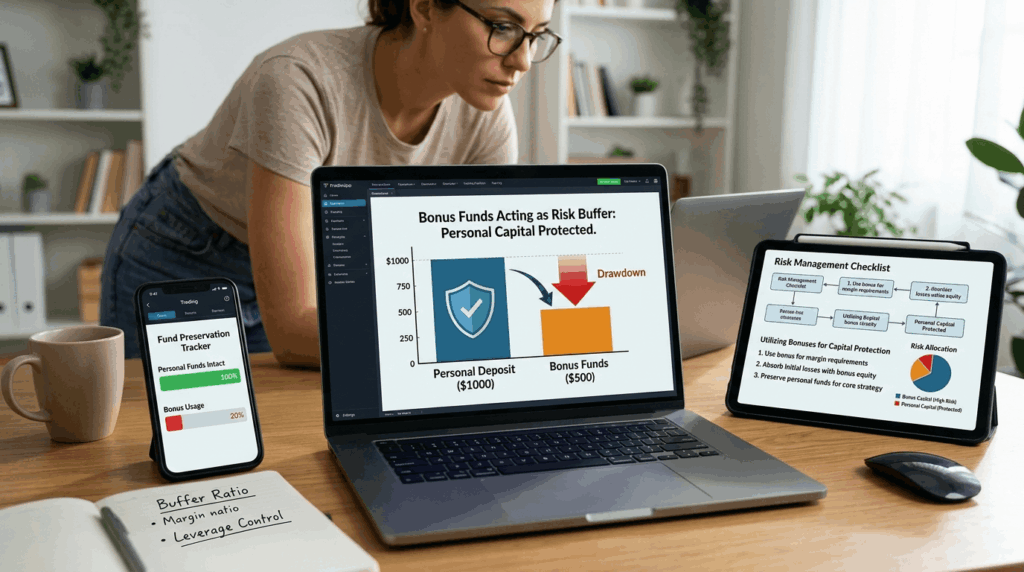
Using reduce trading risk bonuses effectively can transform how you approach the market, especially if your goal is to protect your capital while still pursuing growth. Many traders focus only on profits, yet experienced traders understand that preservation comes first. Therefore, bonuses can act as a strategic buffer, allowing you to explore opportunities with less personal exposure.
At the same time, not all bonus structures support this goal. Some create pressure and encourage risky behavior. However, when used correctly, reduce trading risk bonuses provide a safety layer that helps you stay disciplined. This approach shifts your mindset from aggressive trading to controlled, calculated decision-making, which often leads to better long-term results.
Understanding How Bonuses Reduce Exposure
To fully benefit from reduce trading risk bonuses, you need to understand how they actually protect your funds. In most cases, bonuses add extra margin to your account, allowing you to open positions without relying entirely on your own capital. As a result, you can manage trades more flexibly.
For example, if a trade moves against you, the bonus portion may absorb part of the loss. This reduces the direct impact on your personal balance. Consequently, your account can withstand more volatility without immediate damage. However, this does not eliminate risk entirely, so careful management remains essential.
Additionally, bonuses can extend your trading lifespan. Instead of facing a quick drawdown, you gain more time to recover from temporary losses. This extra breathing room helps you maintain composure and avoid emotional decisions. Over time, this advantage becomes a powerful tool for consistency.
Choosing The Right Bonus Structure
Although bonuses can reduce exposure, not all offers are created equal. Therefore, selecting the right type is critical if you want to truly benefit from reduce trading risk bonuses. Some brokers provide no-deposit bonuses, while others offer deposit-matching promotions. Each type serves a different purpose.
No-deposit bonuses allow you to trade without risking your own money. This makes them ideal for testing strategies or gaining experience. On the other hand, deposit bonuses increase your trading capacity but still involve personal funds. Because of this, you should evaluate which option aligns with your goals.
Equally important are the terms attached to the bonus. Requirements such as trading volume and withdrawal restrictions can influence how you trade. Therefore, always review the conditions carefully before accepting any offer. A bonus that fits your strategy will support your growth rather than limit it.
Building A Low-Exposure Trading Strategy
Once you have selected a suitable bonus, the next step is building a strategy that maximizes its protective benefits. Instead of using the additional capital to take bigger risks, focus on maintaining a conservative approach. This ensures that reduce trading risk bonuses serve their intended purpose.
Start by keeping your position sizes consistent with your usual risk tolerance. Although the bonus increases your margin, it should not encourage larger trades. By maintaining discipline, you protect your core capital while still benefiting from the added flexibility.
Furthermore, prioritize high-probability setups. Rather than chasing every opportunity, wait for trades that align with your strategy. This reduces unnecessary exposure and improves overall performance. Over time, this selective approach leads to more stable results.
In addition, consider setting clear limits for daily or weekly losses. Even with bonus protection, controlling drawdowns remains essential. These limits act as safeguards, ensuring that you do not rely too heavily on the bonus itself.
Managing Risk Without Overconfidence
One common mistake traders make when using reduce trading risk bonuses is becoming overconfident. Because the bonus provides a cushion, it can create a false sense of security. However, this mindset often leads to poor decisions and increased losses.
To avoid this, treat the bonus as a support tool rather than a safety net. While it helps reduce exposure, it does not eliminate the need for discipline. Therefore, continue applying strict risk management rules to every trade.
Moreover, maintain realistic expectations. Bonuses can enhance your trading capacity, but they are not a shortcut to guaranteed profits. By focusing on steady progress, you build a more sustainable trading approach.
Emotional control also plays a key role. When trades go well, it is easy to become overly confident. Conversely, losses can lead to frustration. In both cases, staying calm and consistent ensures that your strategy remains effective.
Tracking Performance And Adjusting Your Approach
As you continue trading, regularly evaluate how reduce trading risk bonuses are affecting your performance. This helps you identify strengths and areas for improvement. By tracking your trades, you gain valuable insights into your decision-making process.
For instance, if you notice that the bonus encourages unnecessary trades, it may be time to adjust your strategy. On the other hand, if it helps you maintain stability during market fluctuations, you can build on that success.
Keeping a trading journal is particularly useful in this context. By recording details such as entry points, outcomes, and reasoning, you create a clear picture of your progress. Over time, this information allows you to refine your approach.
Additionally, reviewing your results periodically ensures that you stay aligned with your goals. Instead of reacting to short-term outcomes, you can focus on long-term improvement. This mindset is essential for consistent growth.
Using Bonuses As A Learning Tool
Beyond reducing exposure, bonuses can also serve as valuable learning tools. When used properly, reduce trading risk bonuses allow you to experiment with new strategies without risking significant capital. This creates opportunities for growth and development.
For example, you can test different trading styles or explore new markets with less pressure. Because the bonus absorbs part of the risk, you can focus on learning rather than worrying about losses. This environment encourages experimentation and innovation.
At the same time, it is important to maintain a structured approach. Even when testing new ideas, follow your risk management rules. This ensures that your learning process remains controlled and productive.
Over time, these experiences contribute to a deeper understanding of the market. As a result, you become more confident and adaptable. This growth extends beyond the bonus itself, improving your overall trading performance.
Avoiding Common Pitfalls With Bonus Usage
While reduce trading risk bonuses offer clear advantages, they can also lead to mistakes if used improperly. One common issue is relying too heavily on the bonus instead of developing a solid strategy. This often results in inconsistent performance.
Another problem involves ignoring the terms and conditions. Failing to meet requirements can lead to forfeited profits or restricted withdrawals. Therefore, understanding the rules is essential for success.
Additionally, overtrading is a frequent challenge. Because the bonus increases available margin, traders may feel tempted to place more trades than necessary. However, this behavior increases risk and reduces efficiency.
To avoid these pitfalls, focus on discipline and planning. By treating the bonus as a complement to your strategy, you maintain control and improve your results.
Long-Term Benefits Of Reducing Personal Exposure
Using reduce trading risk bonuses effectively can provide long-term advantages that go beyond immediate gains. By protecting your capital, you create a more stable foundation for growth. This stability allows you to focus on developing your skills rather than recovering from losses.
Furthermore, reducing exposure helps you build confidence over time. When you know that your risk is controlled, you can make decisions more calmly. This leads to better judgment and improved performance.
In addition, the habits you develop while managing bonuses often carry over into other areas of trading. Discipline, patience, and strategic thinking become part of your routine. As a result, you are better equipped to handle different market conditions.
Ultimately, the goal is not just to preserve funds but to create a sustainable trading approach. By integrating bonuses into your strategy, you achieve both protection and growth.
Conclusion
Reduce trading risk bonuses offer a powerful way to preserve your funds while still participating actively in the market. When used strategically, they provide additional flexibility, reduce personal exposure, and support disciplined trading. However, their effectiveness depends on how you integrate them into your overall plan.
By choosing the right bonus, maintaining strong risk management, and avoiding common mistakes, you can turn these promotions into valuable tools. Instead of chasing quick gains, focus on steady progress and long-term growth. With this approach, bonuses become more than just incentives—they become part of a smarter, more resilient trading strategy.
FAQ
- How do bonuses help protect trading capital?
They add extra margin to your account, which can absorb part of potential losses and reduce direct impact on your funds. - Are no-deposit bonuses better for beginners?
Yes, they allow beginners to gain experience without risking personal money while learning how trading works. - Can I rely entirely on bonus funds for trading?
No, it is important to develop a solid strategy and not depend solely on bonuses for success. - Do all brokers offer the same types of promotions?
No, different brokers provide various bonus structures with unique conditions and requirements. - What is the safest way to use trading bonuses?
The safest approach involves disciplined trading, proper risk management, and careful review of all terms and conditions.