
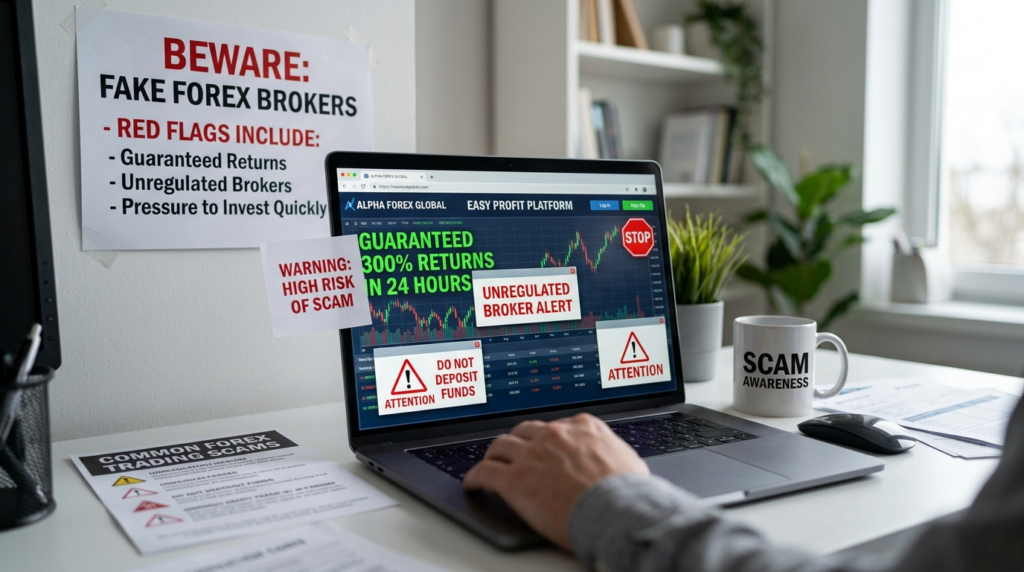
The forex market attracts millions of traders because of its flexibility, liquidity, and profit potential. However, it also attracts scammers looking to exploit inexperienced investors. Many fake forex brokers create professional-looking websites, promise unrealistic returns, and use aggressive sales tactics to convince traders to deposit money quickly. Unfortunately, countless people lose their savings every year because they fail to recognize the warning signs early enough.
Understanding how fake forex brokers operate can help you avoid financial disaster. While some fraudulent companies disappear overnight, others continue operating for years by manipulating traders and hiding behind misleading claims. Therefore, learning how to identify suspicious behavior is essential before opening any trading account.
Why Fake Forex Brokers Are Dangerous
Fake forex brokers do more than simply provide poor service. In many cases, they are designed solely to steal deposits from traders. Some platforms manipulate trades, prevent withdrawals, or shut down without warning. Others may operate fake trading software that shows false profits to encourage larger deposits.
Moreover, these scams often target beginners who lack trading experience. Since new traders are usually focused on making quick profits, scammers use emotional marketing to create urgency and excitement. As a result, victims deposit funds before properly researching the company.
Although legitimate brokers also advertise heavily, regulated companies follow strict financial rules. In contrast, fraudulent firms avoid transparency and often hide important information from clients. Recognizing the difference between trustworthy companies and fake forex brokers can save you from serious financial losses.
No Regulation or Fake Licenses
One of the biggest red flags is the absence of proper regulation. Reliable forex brokers are licensed by recognized financial authorities. These regulators monitor broker activities, enforce compliance rules, and protect traders from fraud.
Scam brokers often claim to be regulated, yet the license numbers they provide are either fake or belong to another company. Therefore, you should always verify licensing details directly on the regulator’s official website. Never trust screenshots or certificates displayed on the broker’s homepage alone.
Additionally, fake forex brokers frequently register their businesses in offshore jurisdictions with weak financial oversight. While offshore registration is not always illegal, it becomes suspicious when the broker refuses to provide clear regulatory information.
Legitimate brokers typically display their license details openly. Furthermore, they explain client protection policies and segregated account practices clearly. If you struggle to find this information, you should proceed carefully.
Promises of Guaranteed Profits
The forex market is unpredictable. Even professional traders experience losses. Therefore, any company promising guaranteed returns should immediately raise concerns.
Many fake forex brokers advertise phrases like “risk-free trading,” “100% win rate,” or “guaranteed daily profits.” These claims are designed to attract inexperienced traders who hope for fast income. However, no legitimate broker can guarantee profits because forex prices constantly fluctuate.
Scammers often use social media ads featuring luxury lifestyles, expensive cars, and fake testimonials. In some cases, they hire actors to pretend they became wealthy through trading. Consequently, victims believe the opportunity is real and deposit funds quickly.
Reliable brokers focus on trading tools, market access, and risk management education instead of promising easy money. Therefore, unrealistic marketing should always be treated as a major warning sign.
Difficulty With Withdrawals
Withdrawal problems are among the clearest signs of fraudulent activity. Many traders only discover the truth after attempting to access their money.
Some fake forex brokers delay withdrawals repeatedly by requesting endless verification documents. Others invent hidden fees or minimum trading requirements before releasing funds. In worse situations, the broker simply stops responding altogether.
Additionally, scammers may pressure traders to deposit more money before processing withdrawals. They often claim that additional investments are necessary to unlock profits or cover taxes. However, legitimate brokers do not operate this way.
Before choosing a broker, research withdrawal reviews carefully. If multiple users report delayed payments or blocked accounts, you should avoid that platform immediately.
Reliable brokers process withdrawals within a reasonable timeframe and explain their payment policies clearly. Transparency is essential in any trustworthy financial service.
Aggressive Sales Pressure
High-pressure sales tactics are another common characteristic of fake forex brokers. Scam representatives often contact traders constantly through phone calls, emails, and messaging apps.
They may claim that a “limited-time opportunity” is available or insist that market conditions require immediate investment. Consequently, victims feel pressured to act without proper research.
Some scammers even assign so-called account managers who pretend to help traders succeed. In reality, these individuals are trained salespeople whose goal is to encourage larger deposits.
Legitimate brokers do not force clients to deposit money aggressively. Instead, they allow traders to explore the platform and make independent decisions. Therefore, excessive pressure should always be considered suspicious.
Furthermore, professional brokers respect client boundaries. If a company continuously contacts you despite refusal, it may indicate fraudulent intentions.
Poor Website Quality and Missing Information
While some scam websites appear polished, many fake forex brokers still display obvious warning signs through poor design and incomplete information.
For example, you may notice spelling mistakes, broken pages, or vague company details. Additionally, some sites lack clear terms and conditions or hide contact information completely.
Fraudulent brokers often avoid listing a physical office address because they do not want traders tracing their operations. Others use fake addresses or virtual offices to appear legitimate.
Another warning sign involves suspicious domain history. Scam websites are often newly created and may disappear within months. Therefore, checking domain age can provide helpful insight.
Reliable brokers usually maintain professional websites with transparent legal documents, customer support channels, and educational resources. Although website quality alone does not guarantee legitimacy, missing information should never be ignored.
Manipulated Trading Platforms
Some fake forex brokers use manipulated trading software to deceive traders. Instead of connecting clients to real market conditions, they control price movements internally.
At first, traders may see impressive profits displayed on the platform. However, these gains are often fake and designed to encourage larger deposits. Once the trader invests more money, the account suddenly experiences unusual losses or technical problems.
Additionally, scam platforms may freeze during volatile market conditions. Others execute trades at unrealistic prices that hurt the trader intentionally.
Legitimate brokers use established trading platforms such as MetaTrader 4 or MetaTrader 5. They also provide transparent pricing and execution policies. Therefore, unfamiliar or poorly functioning software should be approached cautiously.
You should also test demo accounts before depositing real funds. This simple step can reveal platform issues and help identify suspicious broker behavior early.
Fake Reviews and Testimonials
Online reviews can help traders evaluate brokers, yet scammers frequently manipulate public feedback.
Many fake forex brokers publish fabricated testimonials on their websites. These reviews often sound overly promotional and lack genuine details. Additionally, scam companies sometimes flood forums with fake positive comments to bury negative feedback.
At the same time, they may threaten unhappy clients who post honest complaints online. Therefore, researching reviews from multiple independent sources is extremely important.
Look for patterns instead of isolated opinions. If numerous traders mention withdrawal issues, blocked accounts, or aggressive sales calls, the risk is likely real.
You should also be cautious of influencers promoting unknown brokers aggressively. Some influencers receive commissions for attracting deposits, regardless of the broker’s legitimacy.
Reliable research requires patience. However, spending extra time investigating a broker can prevent serious losses later.
Unclear Fees and Trading Conditions
Transparency matters in forex trading. Reputable brokers explain spreads, commissions, leverage, and account conditions clearly before clients deposit funds.
In contrast, fake forex brokers often hide important details intentionally. Traders may discover unexpected fees only after opening an account.
For example, scammers sometimes charge excessive withdrawal fees or apply hidden inactivity penalties. Others manipulate spreads to increase trader losses artificially.
Additionally, some fraudulent brokers advertise extremely high leverage to attract beginners. While high leverage can increase profits, it also magnifies losses dramatically. Therefore, irresponsible leverage marketing can signal dangerous practices.
Always read the broker’s terms carefully before funding an account. If policies seem confusing or incomplete, consider it a serious warning sign.
Lack of Customer Support
Customer service quality can reveal a great deal about a broker’s legitimacy. Scam brokers often provide poor support because they prioritize collecting deposits rather than assisting clients.
You may notice delayed responses, unhelpful answers, or disconnected phone numbers. In some cases, support disappears entirely once withdrawal requests begin.
Reliable brokers invest in professional customer support teams. They offer multiple communication channels, including live chat, email, and phone assistance.
Testing customer service before opening an account is a smart strategy. Ask detailed questions about regulation, withdrawals, and trading conditions. If representatives avoid answering clearly, you should reconsider using that broker.
Good support demonstrates accountability. On the other hand, evasive behavior often suggests deeper problems.
How To Protect Yourself From Forex Scams
Avoiding forex scams requires careful research and emotional discipline. Although scammers constantly develop new tactics, several protective measures can reduce your risk significantly.
First, always verify regulation independently. Never trust marketing claims without checking official financial authority databases yourself.
Second, start with small deposits if you decide to test a broker. This approach limits potential losses while allowing you to evaluate platform reliability and withdrawal speed.
Third, avoid brokers that pressure you emotionally. Fear of missing out often leads traders into poor decisions. Therefore, take your time before committing funds.
You should also research independent reviews, forum discussions, and complaint histories. While no broker receives perfect feedback, consistent negative patterns should never be ignored.
Finally, remember that legitimate trading involves risk. Any company promising guaranteed wealth is likely hiding fraudulent intentions.
Conclusion
The forex market offers genuine opportunities, yet it also contains serious risks from dishonest companies. Fake forex brokers continue targeting traders through fake promises, aggressive marketing, and manipulated platforms. Unfortunately, many victims realize the truth only after losing substantial amounts of money.
Learning the warning signs can help you protect your finances and trade more safely. Lack of regulation, guaranteed profit claims, withdrawal problems, and aggressive sales tactics are all major red flags that should never be ignored.
Additionally, careful research remains your strongest defense. Verify licenses, read independent reviews, test customer support, and avoid emotional decision-making. Although scammers constantly evolve, informed traders are far less likely to become victims.
Choosing a trustworthy broker takes time, but protecting your money is always worth the effort. A cautious approach today can save you from expensive mistakes tomorrow.
FAQ
1. How Can I Verify If A Forex Broker Is Legitimate?
You can verify legitimacy by checking the broker’s license directly on the official website of a recognized financial regulator.
2. Why Do Scam Brokers Promise Guaranteed Returns?
They use guaranteed profits to attract inexperienced traders who want quick and easy money.
3. Are Offshore Forex Brokers Always Dangerous?
Not always, but offshore brokers with weak regulation and poor transparency carry higher risks.
4. What Should I Do If A Broker Refuses Withdrawals?
Stop depositing money immediately, document all communication, and report the broker to financial authorities.
5. Which Trading Platforms Are Commonly Used By Reliable Brokers?
Trusted brokers often use established platforms like MetaTrader 4, MetaTrader 5, or cTrader.